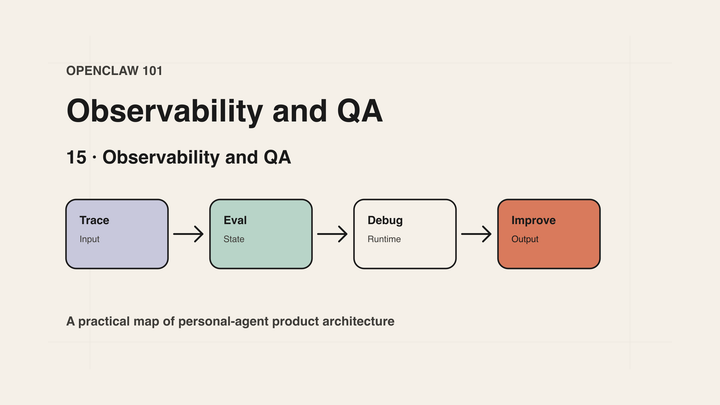
OpenClaw 101|15|Observability and QA
长期运行 Agent 不能只看最终回复。OpenClaw 用 event stream、transcripts、usage、QA lanes、Mantis 和 public review 形成可复现证据链。
阅读全文
长期运行 Agent 不能只看最终回复。OpenClaw 用 event stream、transcripts、usage、QA lanes、Mantis 和 public review 形成可复现证据链。
阅读全文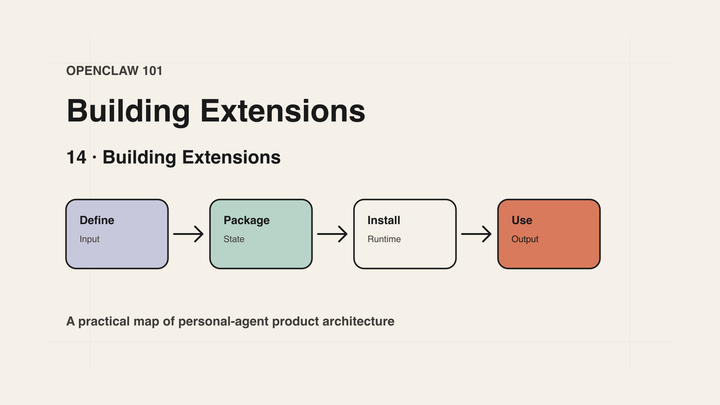
OpenClaw 扩展的关键是保持边界:manifest-first discovery、capability registration、activation planning、hooks 和共享 message tool。
阅读全文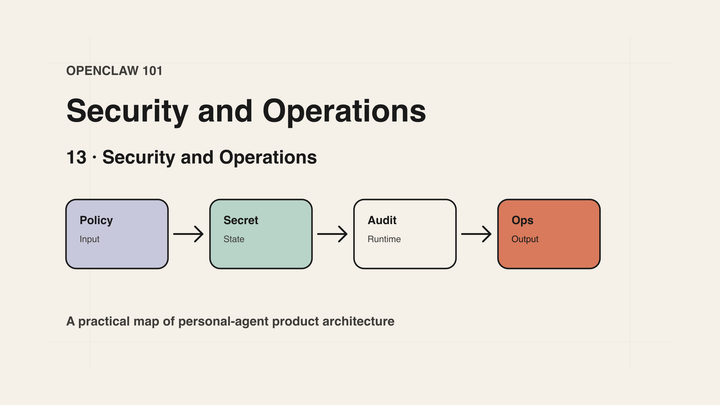
一个能读文件、跑命令、发消息、调用设备的 Agent 必须有分层安全:auth、pairing、allowFrom、tool policy、sandbox、approval 和 audit。
阅读全文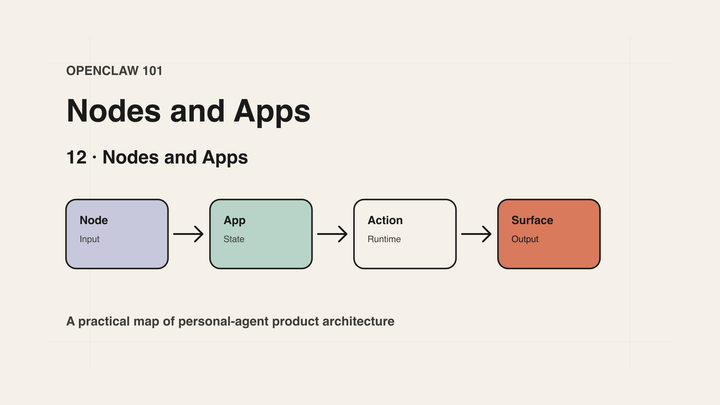
Nodes and Apps 把 OpenClaw 从聊天带到真实设备:screen、camera、location、canvas、App SDK 和 device pairing。
阅读全文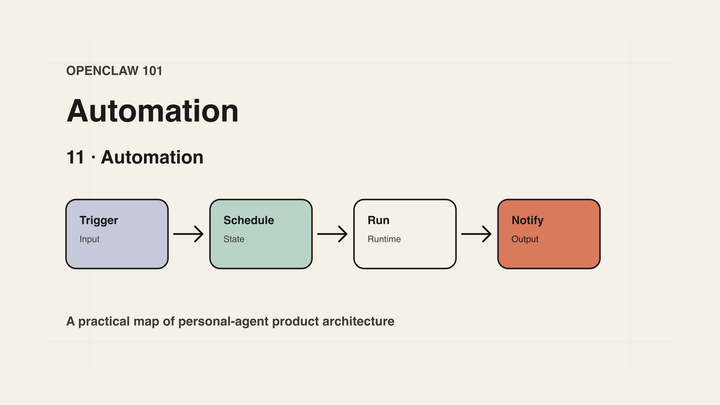
Automation 让 Agent 从被动聊天走向主动系统:cron、webhook、hooks、commitments、heartbeat 和 task records 都有不同边界。
阅读全文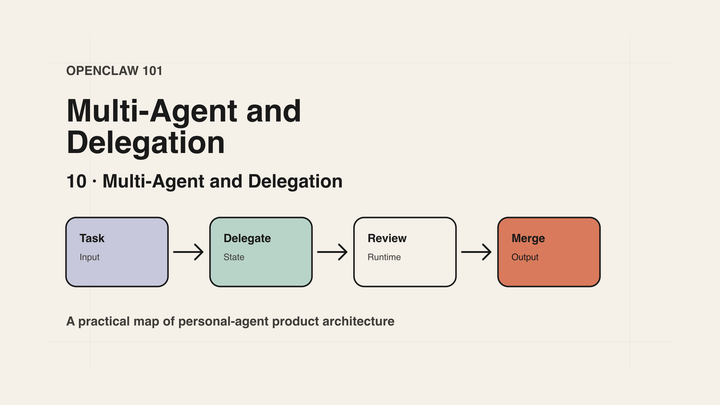
多 Agent 不是简单并发。OpenClaw 用 named agents、session isolation、tool policy 和 specialist lanes 管理 delegated work。
阅读全文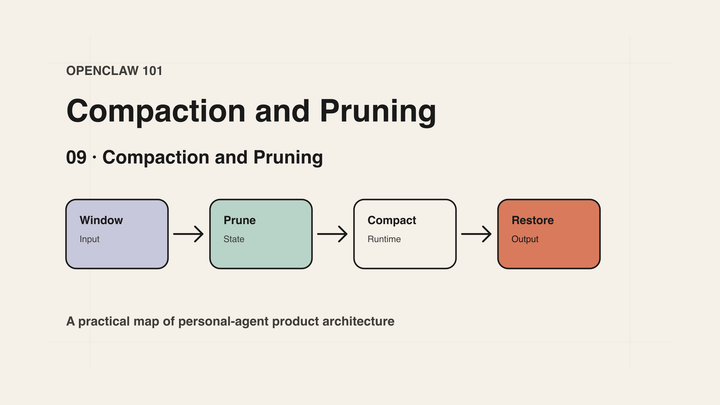
长对话一定会撞上上下文窗口。OpenClaw 用 compaction、pruning、memory flush 和 context engine 把历史变成可继续运行的状态。
阅读全文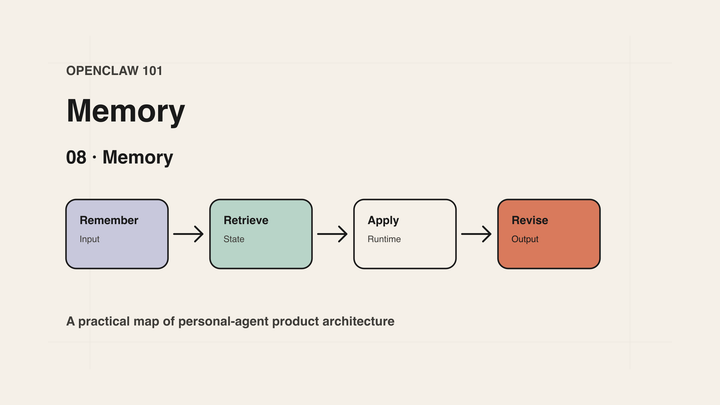
长期运行 Agent 需要可检查的记忆层:durable memory、daily notes、hybrid search、memory flush、dreaming 和 wiki 化整理。
阅读全文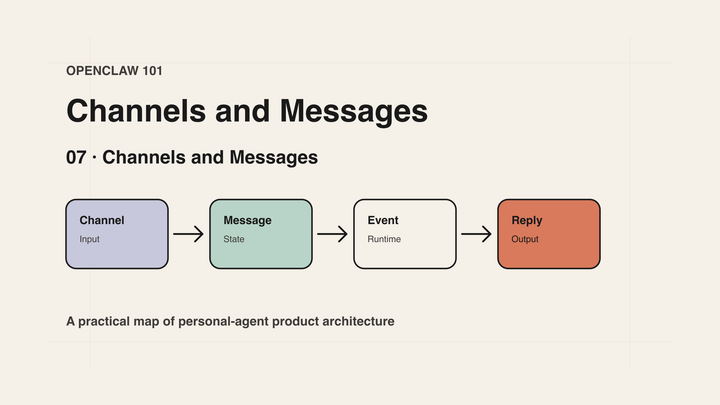
真实聊天渠道不是文本管道:OpenClaw 要处理 dedupe、debounce、history wrapper、queue mode、threading、chunking 和 silent reply。
阅读全文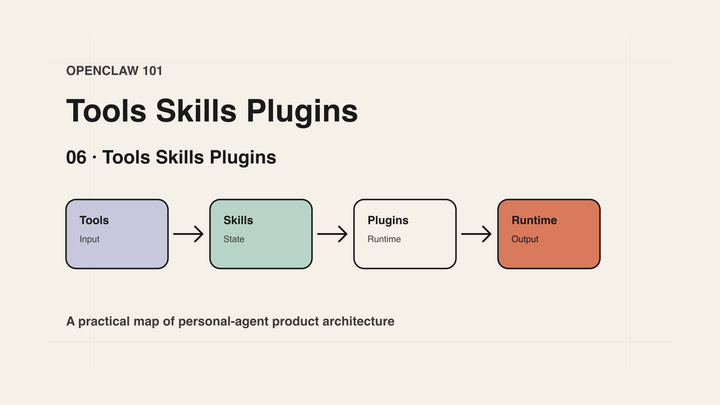
OpenClaw 的能力系统分三层:Tools 负责行动,Skills 负责方法,Plugins 负责运行时扩展。混在一起就会失去边界。
阅读全文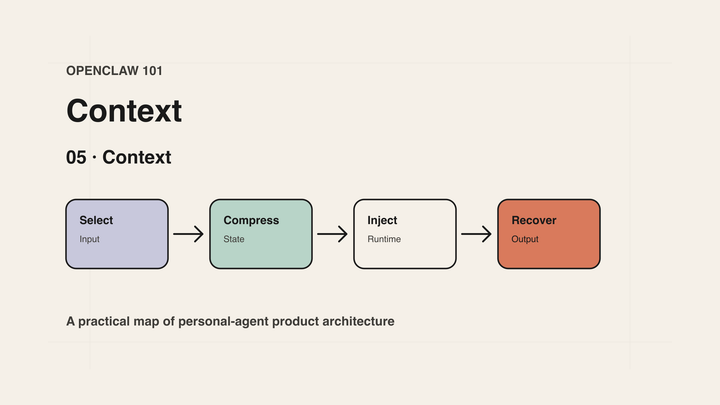
Context 是模型每一轮真正看到的东西:system prompt、history、tool schemas、workspace 注入、工具结果、summary 和召回材料。
阅读全文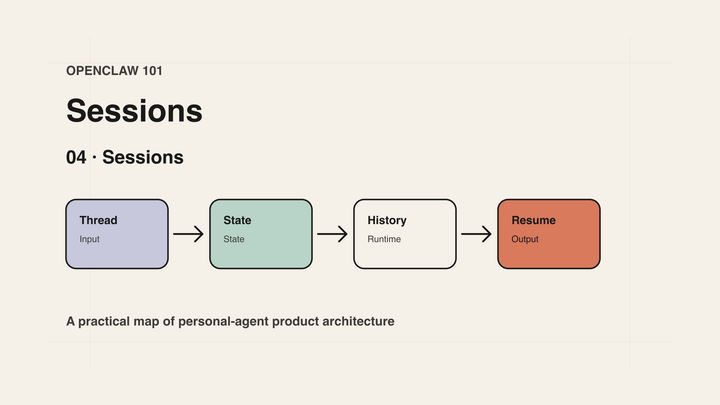
Session 是 OpenClaw 的状态、并发和隐私边界:决定消息路由、历史共享、reset、cleanup、transcript 和 queue lane。
阅读全文